BIM on the Transparaíba water conveyance system: from contract to construction
This Dicas de BIM post is part of a selection of standout papers from the proceedings of the 7th and 8th editions of the A ERA BIM International Congress, organized by @SINAENCO in 2024 and 2025, respectively. The article was published in the proceedings of the 7th edition, held November 26–28, 2024, in São Paulo, Brazil.
The paper was written by João Rafael Albuquerque Dias, Livia de Souza Marinho, Alexandre Barbosa Maltez Oliveira, Karla Danielle Bizerra Cavalcante, Marcelo Haruo Fugimoto.
The IFC models gave the supervision team a basis for finding clashes and extracting quantities. BCF let them record issues and send them to the people responsible.
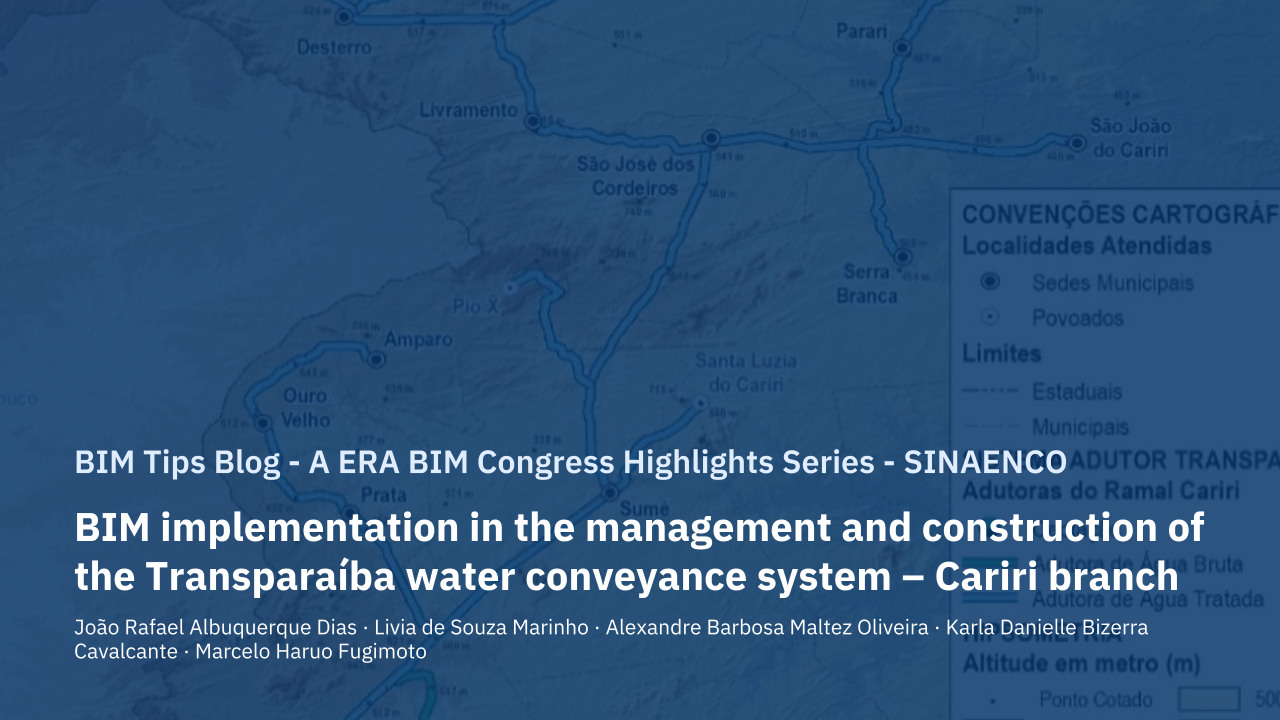
The case began with the 2022 tender, which already included BIM requirements. The Cariri branch of the Transparaíba water conveyance system was planned to expand the supply of treated water to 18 municipalities and rural communities. The project envisaged about 370 kilometers of pipelines and a flow rate of 410 liters per second. The researchers examined how information modeling requirements moved from the tender into day-to-day design, construction, and oversight. Figure 1 shows the overall layout of the Cariri water conveyance branch.
Figure 1 — Overall layout of the Cariri water conveyance branch
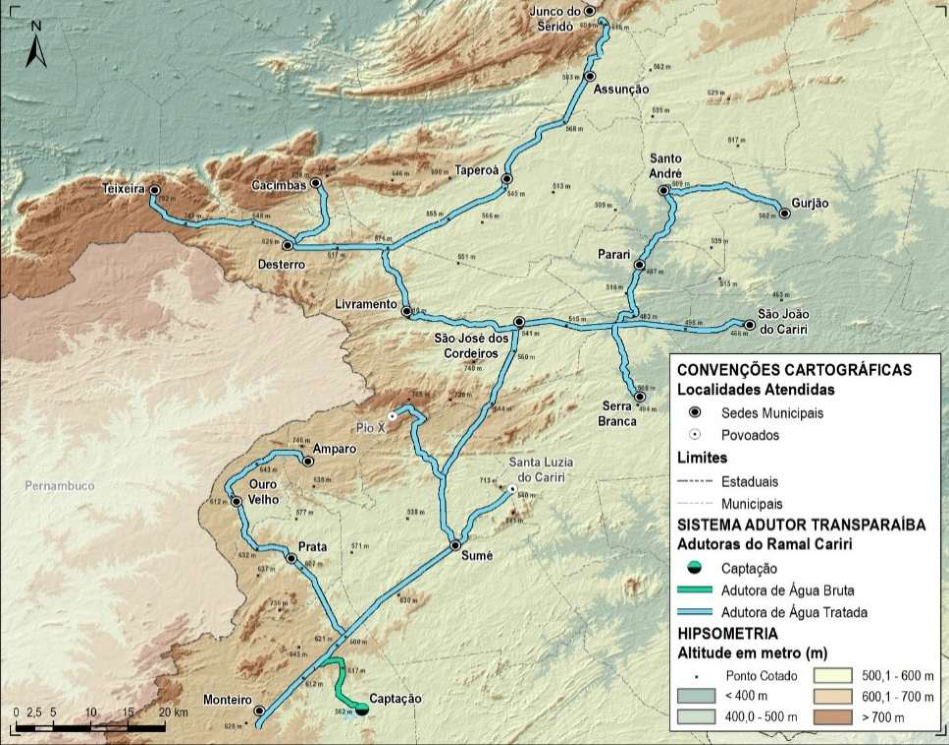
Source: (Dias; Marinho; Oliveira; Cavalcante; Fugimoto, 2024). Figure 1 in the proceedings, p. 26
The contract followed the FIDIC Yellow Book’s Plant and Design-Build model, which required coordination between design and construction. The team described how a BIM execution plan translated the contractual requirements into defined processes and deliverables. A common data environment centralized information, and the open IFC and BCF formats supported model exchange and issue tracking among the participants.
Open formats also meant that project oversight did not require everyone to use the same application. In the arrangement described, exchanged models and issue records served different purposes. Supervisors could examine a clash in context and then follow the response from the team responsible for the deliverable. Figure 2 shows the BCF issue sent to the contractor for review.
Figure 2 — BCF issue sent to the contractor for review
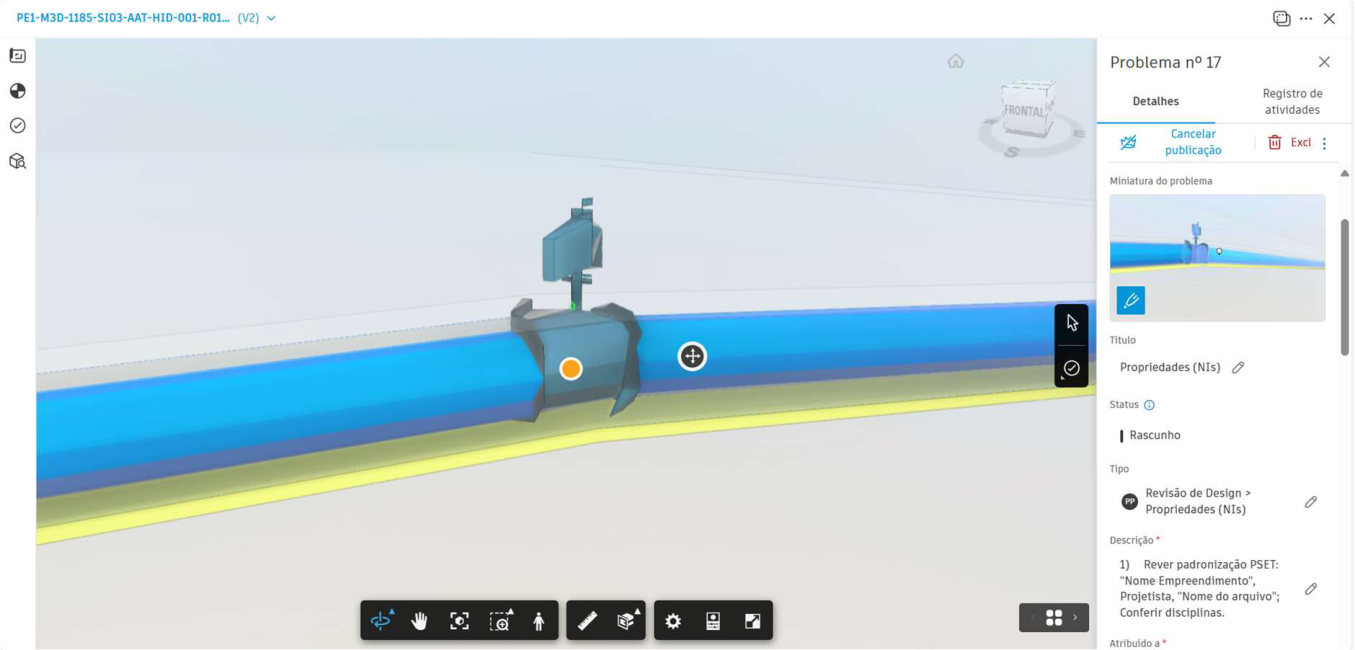
Source: (Dias; Marinho; Oliveira; Cavalcante; Fugimoto, 2024). Figure 6 in the proceedings, p. 30
The oversight team used the models to detect clashes, extract quantities, and review constructability. The authors reported that checks and audits improved communication and helped flag errors before they led to rework. They also documented difficulties in adapting the BIM requirements to the contract and in working with few references specific to public water infrastructure projects.
The case documented a way of linking each check to a deliverable and a supervisory responsibility. That was the study’s most concrete contribution for clients and oversight teams working on comparable projects.
Read the paper in the free proceedings of the 7th A ERA BIM Congress (p. 24)
See the version of this article published on Zenodo
Want to learn more about using IFC to exchange BIM models for infrastructure projects? Explore EBBIM’s course “IFC – dos fundamentos à gestão de projetos e obras”.
In the Transparaíba water conveyance study by João Rafael Albuquerque Dias and coauthors, the supervision team used IFC models to detect clashes and guide its design review. EBBIM developed POSEIDON, a free tool for geometric clash detection.
Run a free clash test on your IFC BIM models now at poseidon.ebbim.com.br.