What to check in a BIM deliverable for a public client
This Dicas de BIM post is part of a selection of standout papers from the proceedings of the 7th and 8th editions of the A ERA BIM International Congress, organized by @SINAENCO in 2024 and 2025, respectively. The article was published in the proceedings of the 7th edition, held November 26–28, 2024, in São Paulo, Brazil.
The paper was written by Carlos Eduardo Gomes Carneiro, Eduardo Ribeiro dos Santos.
In the proposed approach, IFC classification would let public agencies identify groups of BIM elements and specify what information to check on receipt.
The research documented in 2024 compared BIM manuals and guidelines published between 2014 and 2023. The use of BIM in public procurement raised a question for teams receiving designs: what evidence would justify accepting a model or returning it for correction? The researchers began with the distinction between requesting a BIM deliverable and specifying the information a public agency needed to find in it. The challenge was to establish minimum criteria that technical teams could apply consistently.
The study reported an early stage of a master’s research project. The authors discussed the level of information expected for model elements and their classification under IFC, an open standard for exchanging data. These definitions helped distinguish a structural check of the file from an assessment of whether the model served its intended purpose. Table 1 shows the BIM documents analysed.
Table 1 — BIM documents analysed in the study
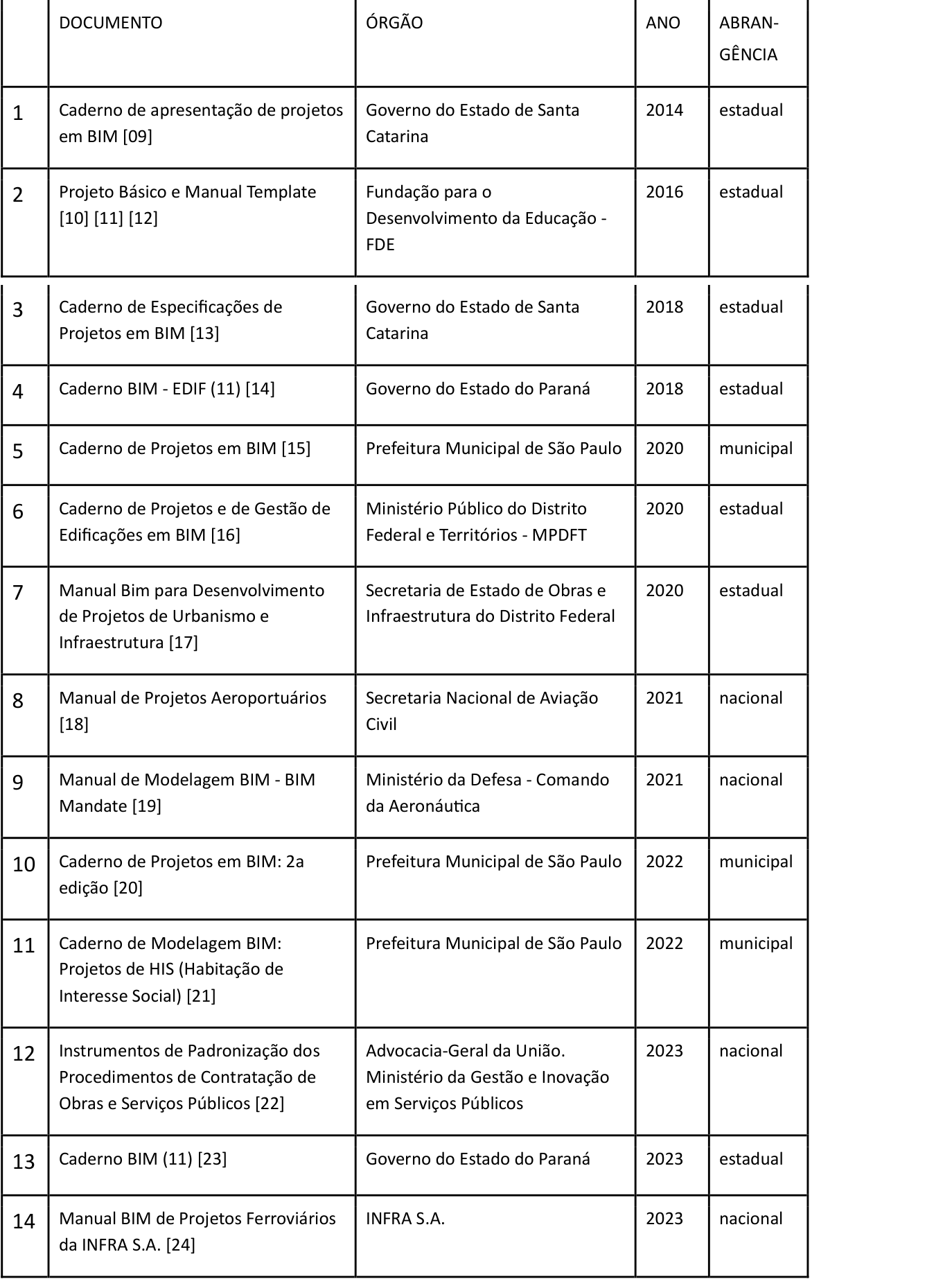
Source: (Carneiro; Santos, 2024). Table 1 in the proceedings, p. 90
Classification was part of the acceptance problem. If elements were identified under a common schema, a review team could apply criteria to defined groups of objects instead of inferring the function of each component from its appearance or its name in the originating application.
The study connected acceptance to the original specification. If the tender or contract had left the required information undefined, a reviewer would have had little basis for telling a missing model attribute from something that had never been commissioned. Verification criteria therefore had to be considered before delivery. Table 2 shows the requirements matrix for the documents analysed.
Table 2 — Requirements matrix for the documents analysed (excerpt)
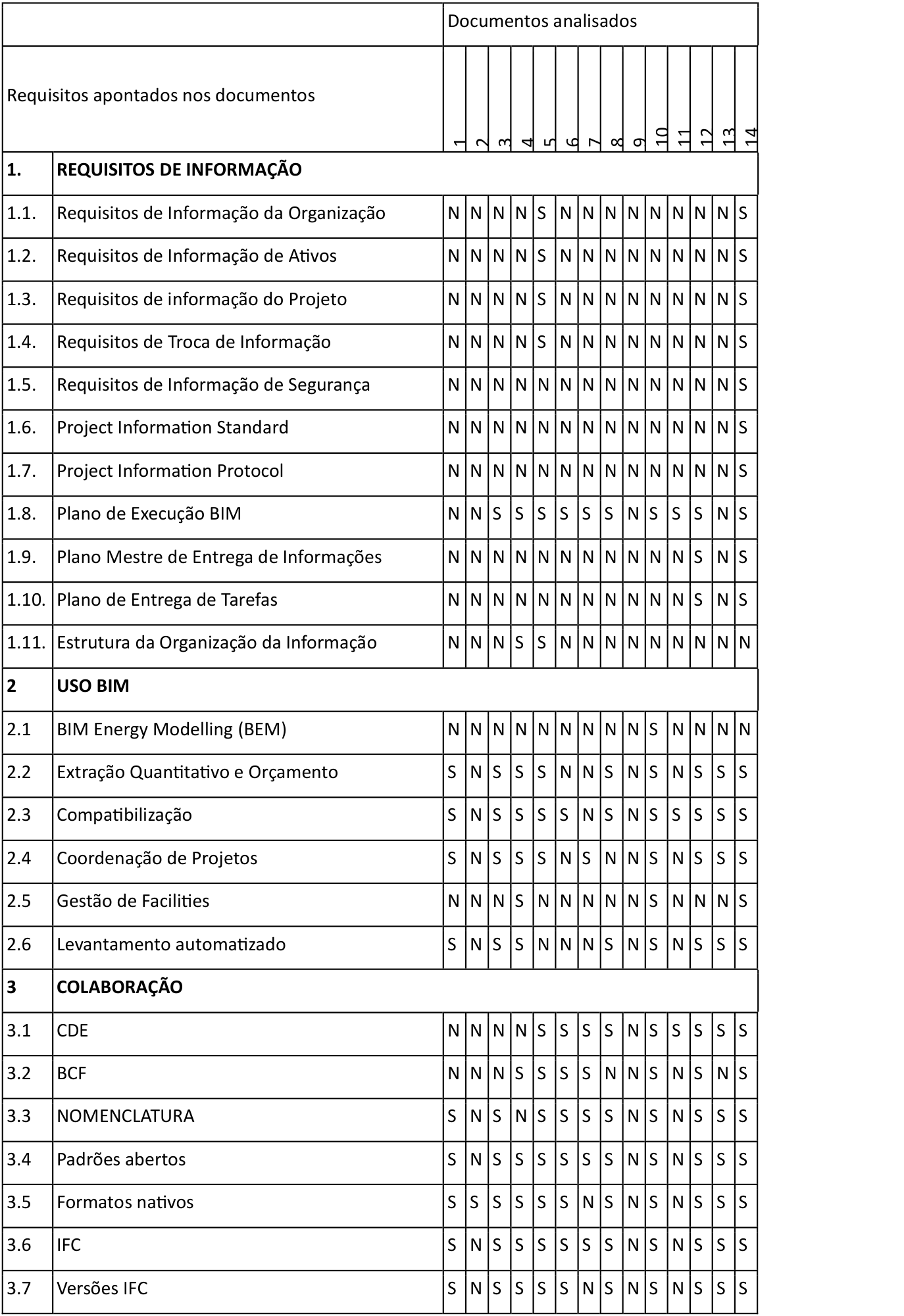
Source: (Carneiro; Santos, 2024). Table 2 in the proceedings, p. 92
The contribution was to frame a procurement problem and organize the issues that would inform the criteria. The authors presented research directions for later analysis, without treating this early stage as a protocol already validated across public agencies.
Read the paper in the free proceedings of the 7th A ERA BIM Congress (p. 88)
See the version of this article published on Zenodo
Want to learn more about reviewing BIM models submitted to public agencies? Explore EBBIM’s course “Análise e Aprovação de projetos em BIM por entes públicos e privados”.