Modeling with Hidden Geometry
·1 min read
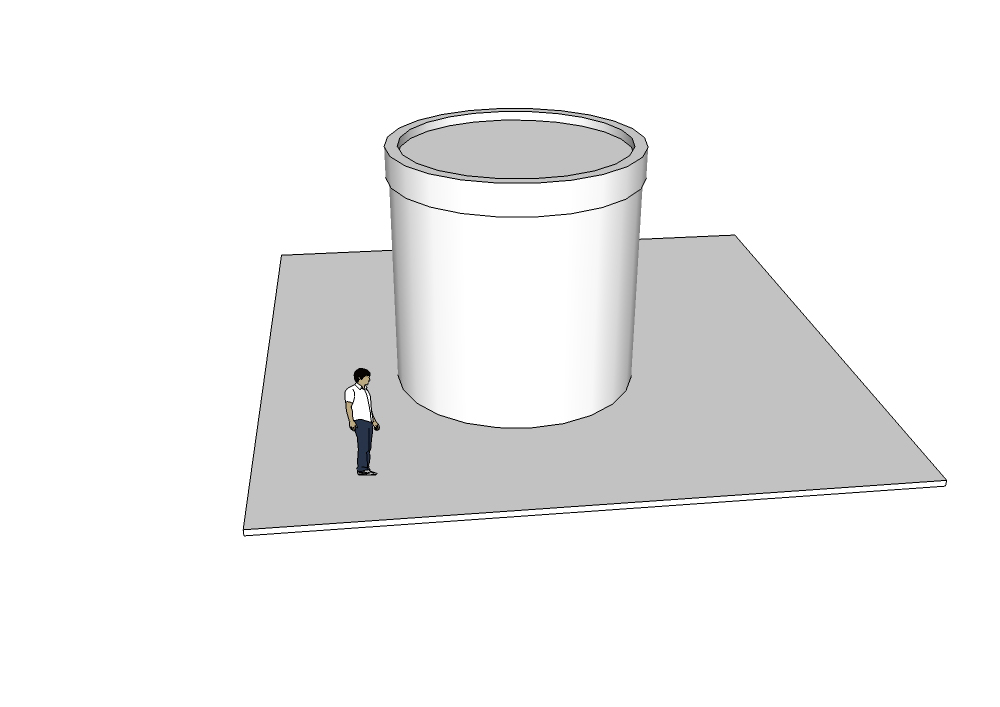
Anyone who uses SketchUp already knows that the Push/Pull and Offset tools are essential for modeling. But when we try to use them on a Surface, a prohibited sign appears next to the tool's icon, warning that the tool cannot be used on curved or smoothed surfaces.
There are already plugins that allow you to work with curved surfaces, offering complex modeling tools, such as Joint Push/Pull. But the simplest solution for modeling on surfaces is to enable Hidden Geometry. With this option turned on, SketchUp "breaks down" the surface into faces, allowing the use of the Push/Pull and Offset tools. To recompose the faces back into a surface, simply disable Hidden Geometry.
In the example below, a cylinder is a hypothetical information center. With hidden geometry visible, Offset was used to mark out the window openings, then Push/Pull was used to create the openings.
[caption id="attachment_123" align="aligncenter" width="600"] Initial cylinder. Without viewing hidden geometry, it's not possible to use Offset or Push/Pull.[/caption]
[caption id="attachment_124" align="aligncenter" width="600"]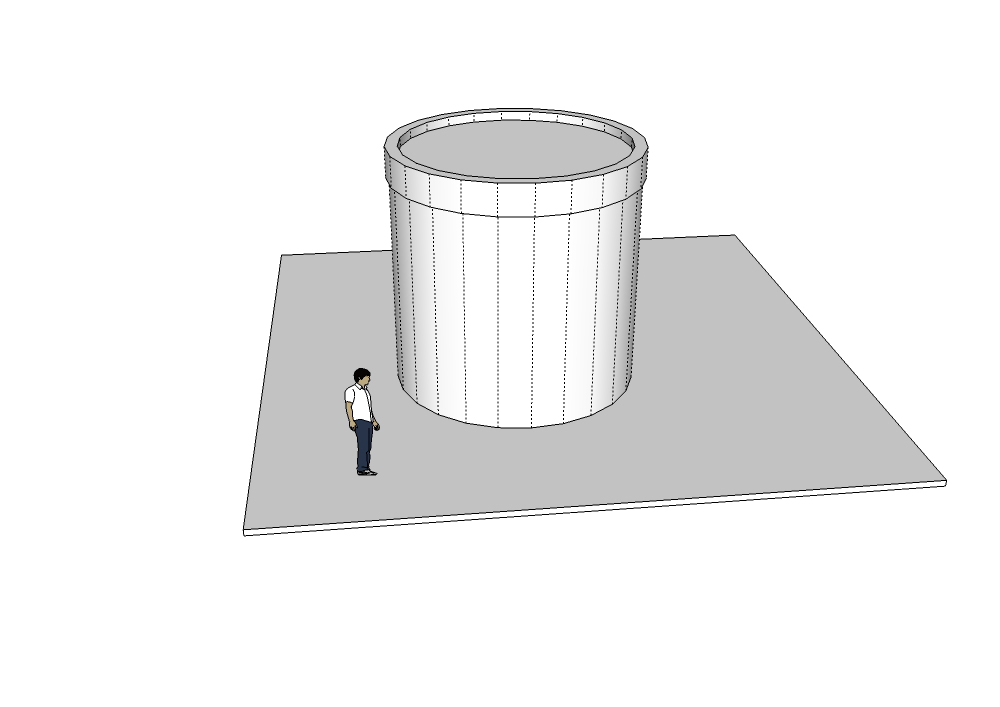 Model with hidden geometry display turned on.[/caption]
[caption id="attachment_125" align="aligncenter" width="600"]
Model with hidden geometry display turned on.[/caption]
[caption id="attachment_125" align="aligncenter" width="600"]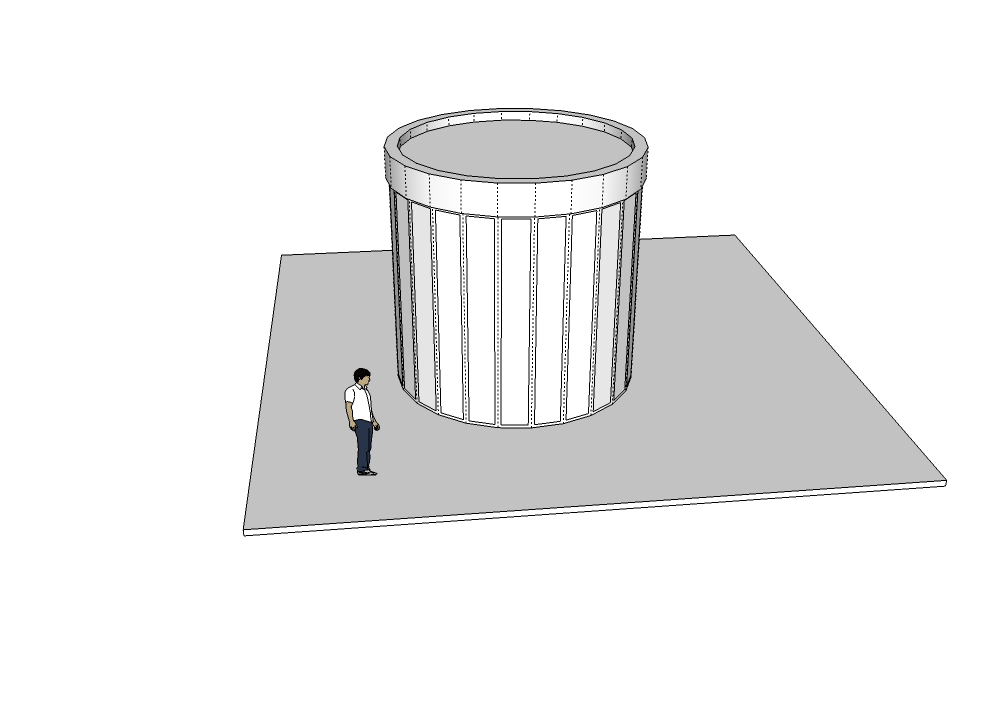 Marking the openings using Offset.[/caption]
[caption id="attachment_126" align="aligncenter" width="600"]
Marking the openings using Offset.[/caption]
[caption id="attachment_126" align="aligncenter" width="600"]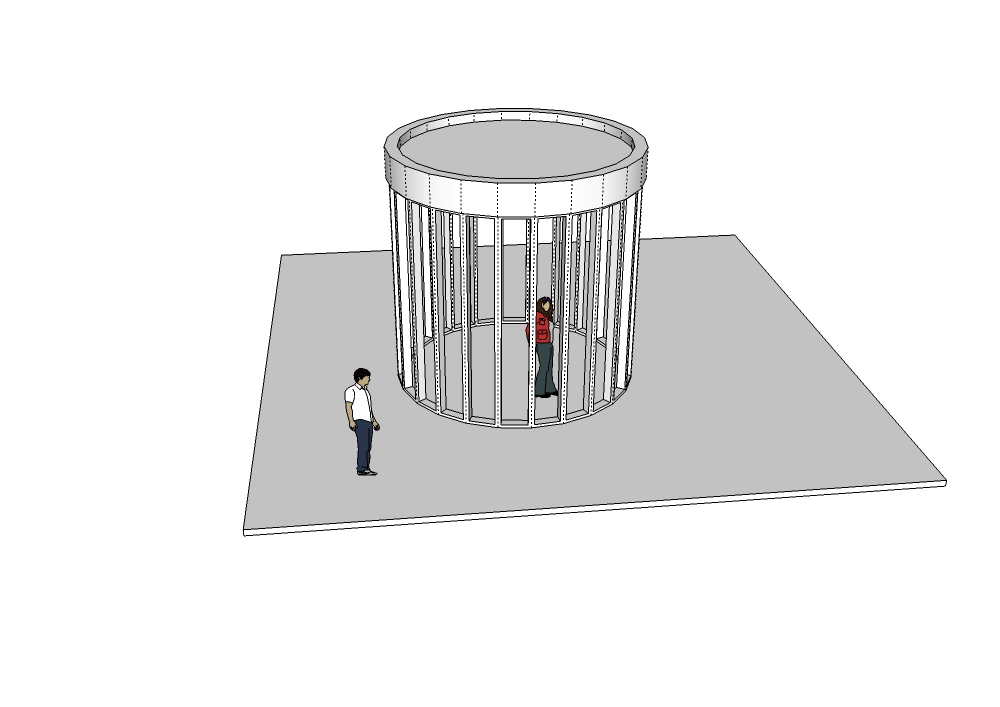 Opening the windows and door with Push/Pull.[/caption]
[caption id="attachment_127" align="aligncenter" width="600"]
Opening the windows and door with Push/Pull.[/caption]
[caption id="attachment_127" align="aligncenter" width="600"]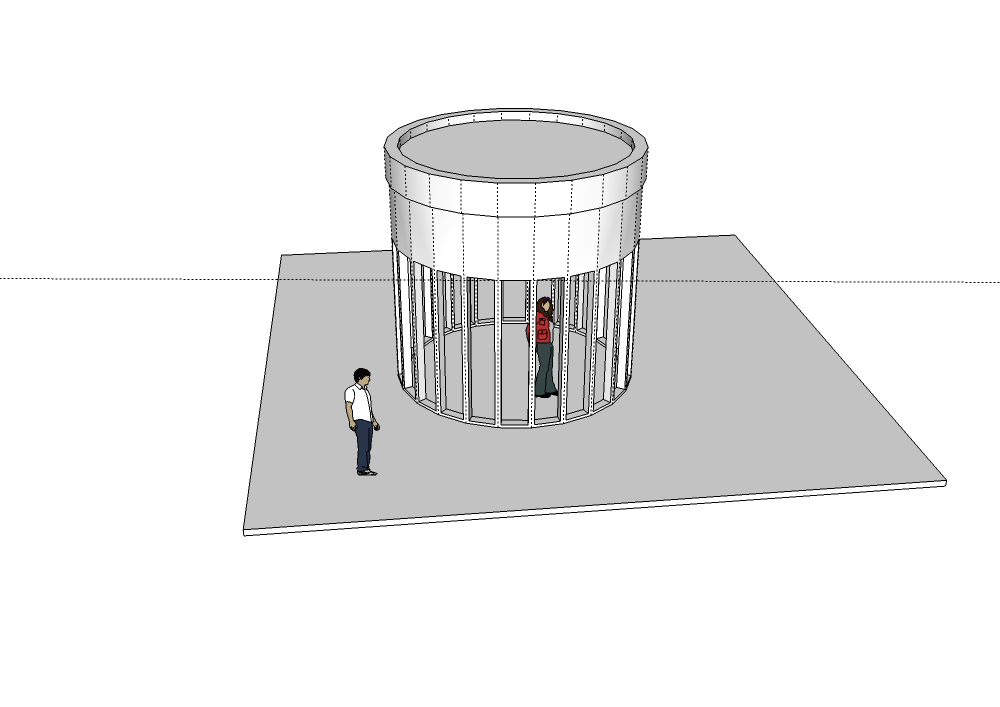 Adjusting the openings with Push/Pull.[/caption]
[caption id="attachment_136" align="aligncenter" width="600"]
Adjusting the openings with Push/Pull.[/caption]
[caption id="attachment_136" align="aligncenter" width="600"]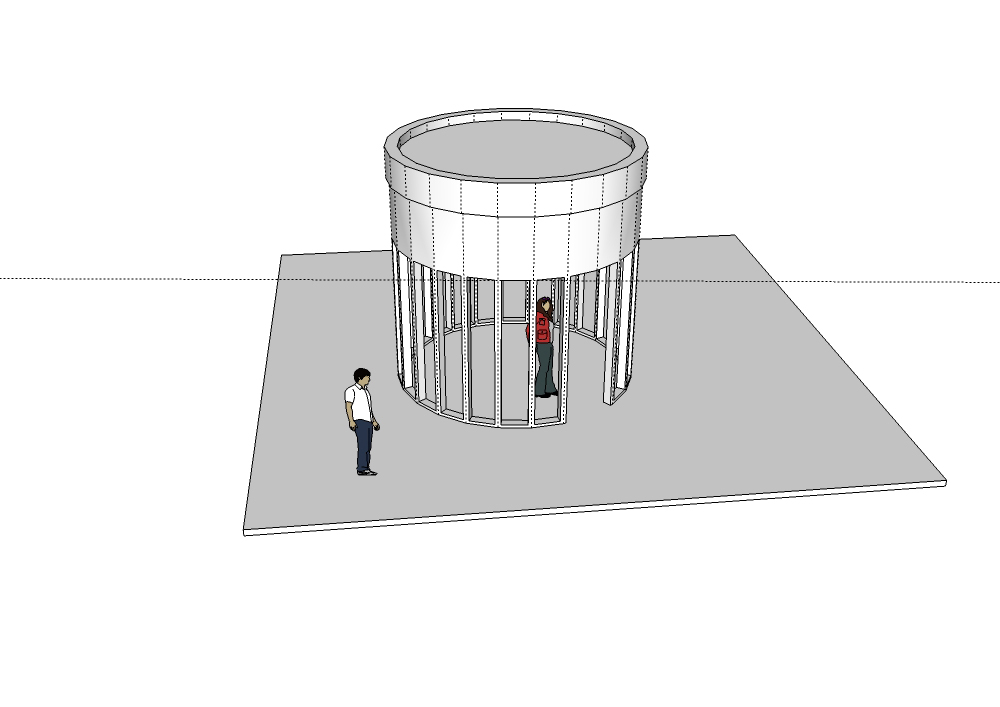 Opening the entrance gap.[/caption]
[caption id="attachment_129" align="aligncenter" width="600"]
Opening the entrance gap.[/caption]
[caption id="attachment_129" align="aligncenter" width="600"]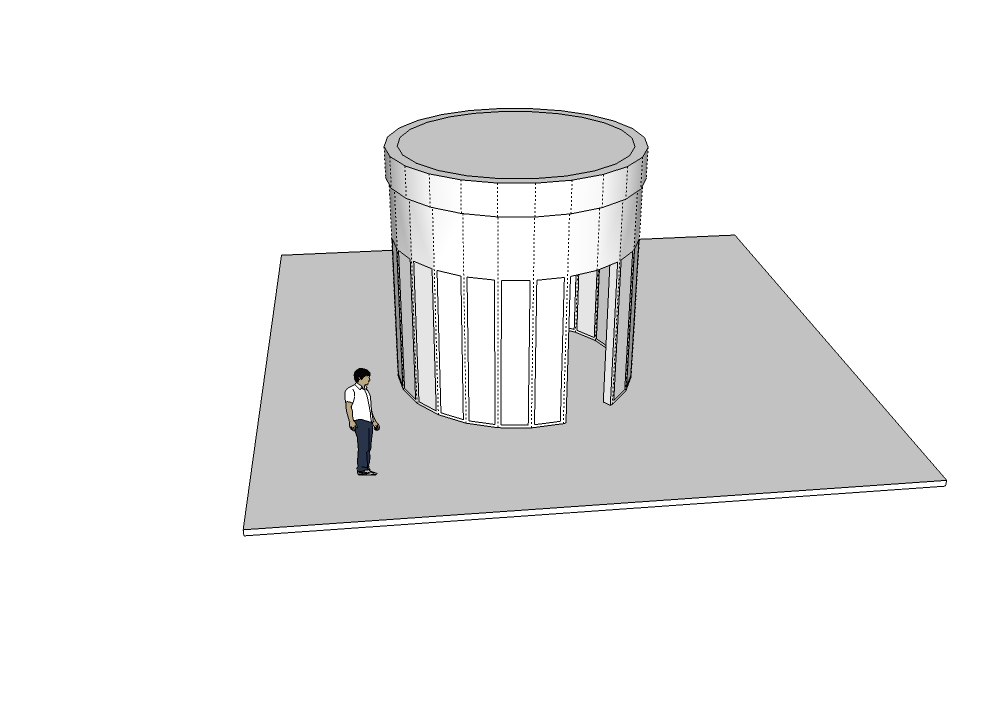 Closing off the windows to create the glass faces.[/caption]
[caption id="attachment_122" align="aligncenter" width="600"]
Closing off the windows to create the glass faces.[/caption]
[caption id="attachment_122" align="aligncenter" width="600"]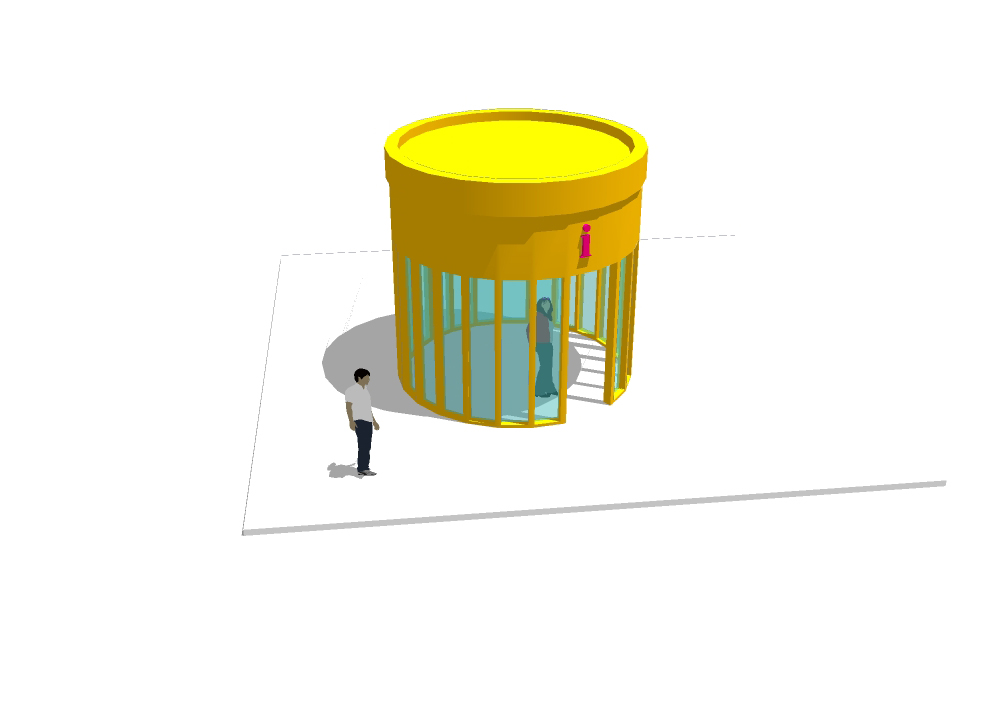 Cylinder modeled without a plugin.[/caption]
To turn the hidden geometry display on and off, go to the View/Hidden Geometry menu.
You can also use the Soften Edges window to break the surfaces down into faces, and vice versa, but viewing hidden geometry is a quicker procedure.
Cylinder modeled without a plugin.[/caption]
To turn the hidden geometry display on and off, go to the View/Hidden Geometry menu.
You can also use the Soften Edges window to break the surfaces down into faces, and vice versa, but viewing hidden geometry is a quicker procedure.
Initial cylinder. Without viewing hidden geometry, it's not possible to use Offset or Push/Pull.[/caption]
[caption id="attachment_124" align="aligncenter" width="600"] Model with hidden geometry display turned on.[/caption]
[caption id="attachment_125" align="aligncenter" width="600"] Marking the openings using Offset.[/caption]
[caption id="attachment_126" align="aligncenter" width="600"] Opening the windows and door with Push/Pull.[/caption]
[caption id="attachment_127" align="aligncenter" width="600"] Adjusting the openings with Push/Pull.[/caption]
[caption id="attachment_136" align="aligncenter" width="600"] Opening the entrance gap.[/caption]
[caption id="attachment_129" align="aligncenter" width="600"] Closing off the windows to create the glass faces.[/caption]
[caption id="attachment_122" align="aligncenter" width="600"] Cylinder modeled without a plugin.[/caption]
To turn the hidden geometry display on and off, go to the View/Hidden Geometry menu.
You can also use the Soften Edges window to break the surfaces down into faces, and vice versa, but viewing hidden geometry is a quicker procedure.