Looking for the causes of structural and electrical BIM clashes
This Dicas de BIM post is part of a selection of standout papers from the proceedings of the 7th and 8th editions of the A ERA BIM International Congress, organized by @SINAENCO in 2024 and 2025, respectively. The article was published in the proceedings of the 8th edition, held November 25–27, 2025, in São Paulo, Brazil.
The paper was written by Maely Silva, Mariane Lima, Anderson Chaurais, Ana Mendes, Romell Laytynher, Thayse Carvalho, Bianca Vieira.
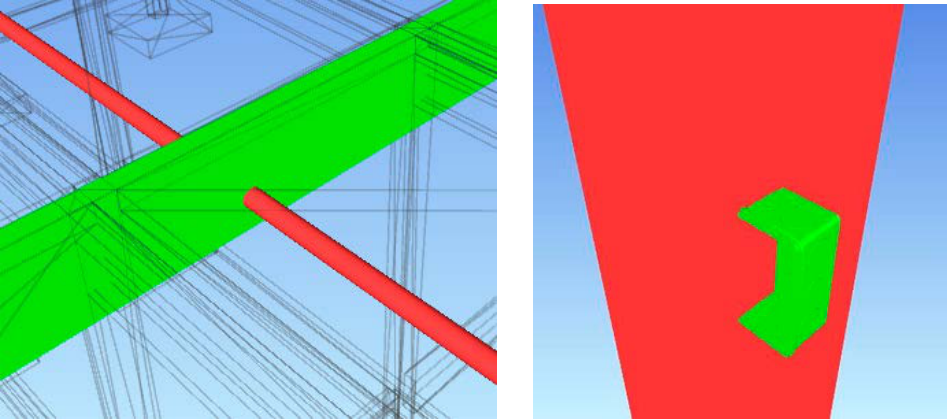
Comparing the BIM models revealed recurring patterns, such as conduits crossing beams. Those findings guided the investigation into causes in the structural and electrical designs.
Clash detection showed where two components overlapped, but it did not explain why the same issue appeared across different projects. In the analysis documented in 2025, the researchers examined this problem at the interface between structures and electrical services. They sought to identify conditions behind recurring conflicts that could be addressed before coordination.
The study analyzed 18 projects and recorded 610 clashes. Of those, 424 involved the structural and electrical disciplines, about 69.5 percent of the total. The team used root cause analysis to investigate where the detected issues originated instead of ending the review once overlapping geometries had been located. Figure 1 shows the clashes between conduit and beam and between junction box and column.
Figure 1 — Clashes between conduit and beam and between junction box and column
Source: (Silva; Lima; Chaurais; Mendes; Laytynher; Carvalho; Vieira, 2025). Figure 2 in the proceedings, p. 131
The interface between the two disciplines was useful because it required the researchers to connect a clash with decisions made in different drawings. Moving a component could resolve that instance. Reviewing the information used to choose its position could help prevent the same problem from recurring elsewhere.
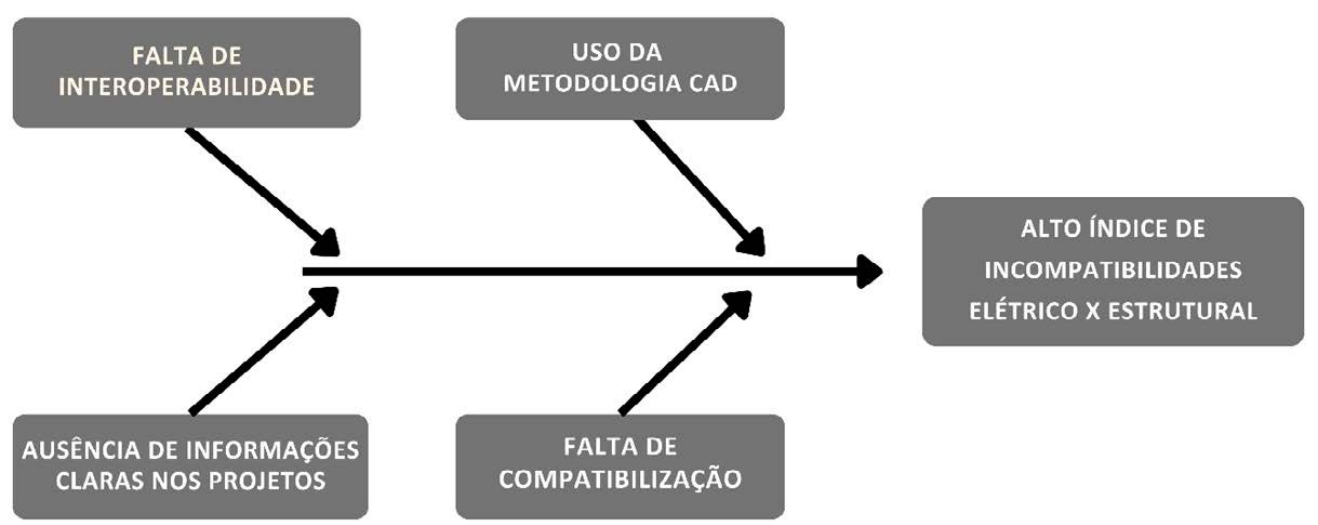
Causes identified in the sample included missing or ambiguous information in the original CAD drawings and interoperability difficulties between designers. These findings shifted part of the discussion to the production and exchange of information before the models were checked. Figure 2 shows the Ishikawa diagram for root cause analysis.
Figure 2 — Ishikawa diagram for root cause analysis
Source: (Silva; Lima; Chaurais; Mendes; Laytynher; Carvalho; Vieira, 2025). Figure 4 in the proceedings, p. 133
The figures described the projects studied. The methodological contribution was to show how coordinators could use a record of clashes to investigate their origins and target changes to the process, such as clarifying input information before models were brought together.
Read the paper in the free proceedings of the 8th A ERA BIM Congress (p. 127)
See the version of this article published on Zenodo
In the study by Maely Silva and coauthors, clash tests revealed recurring patterns such as conduits crossing beams and guided the investigation into their causes. EBBIM developed POSEIDON, a free tool for geometric clash detection.
Run a free clash test on your IFC BIM models now at poseidon.ebbim.com.br.