Teaching BIM with Bonsai: lessons from a workshop
This Dicas de BIM post is part of a selection of standout papers from the proceedings of the 7th and 8th editions of the A ERA BIM International Congress, organized by @SINAENCO in 2024 and 2025, respectively. The article was published in the proceedings of the 8th edition, held November 25–27, 2025, in São Paulo, Brazil.
The paper was written by Monica S Salgado, Maria Clara V Casara, Alana L Holanda, Carolina M Coutinho, Claudia B T Menezes, Gustavo C Guimarães, Natalia R Fantin, Pamela Lopes, Raissa B A Cruz.
IFC let participants open an Archicad BIM model in Bonsai and use it to try clash detection and quantity takeoff.
A workshop at the Federal University of Rio de Janeiro documented in 2025 investigated what architecture students and practitioners could do with Bonsai, a free BIM tool. The starting point was an adoption barrier: licensing costs made initial trials harder, while an open alternative offered access but still needed to be learned and tested in working tasks.
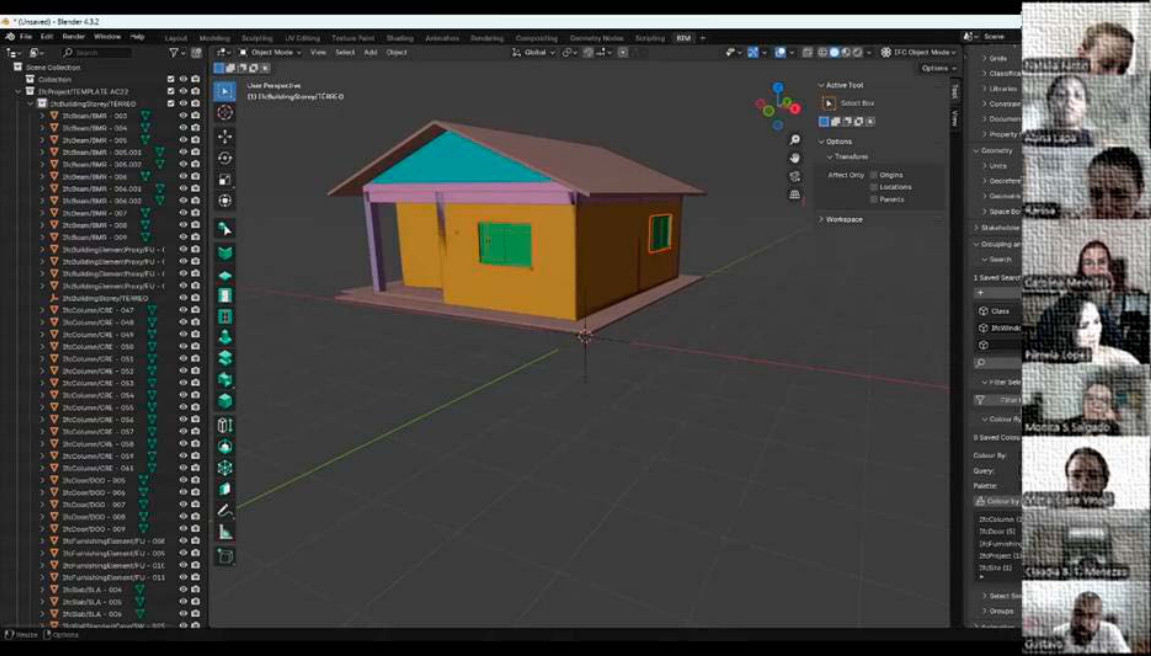
The methods section described four weekly meetings totaling 10 hours of group discussion. The abstract mentioned five sessions. Participants tried the software, and the authors recorded potential uses and difficulties encountered during the activities. The format made it possible to observe how participants incorporated the tool into modeling and review tasks beyond becoming familiar with its interface. Figure 1 shows the BONSAI workshop during the model-auditing tests.
Figure 1 — BONSAI workshop during the model-auditing tests
Source: (Salgado; Casara; Holanda; Coutinho; Menezes; Guimarães; Fantin; Lopes; Cruz, 2025). Figure 3 in the proceedings, p. 389
The account also distinguished what could be observed in a short workshop from what would require experience on projects. The sessions offered a first encounter and exposed difficulties. Studying how the tool became part of everyday work would have required following additional tasks over a longer period of practice.
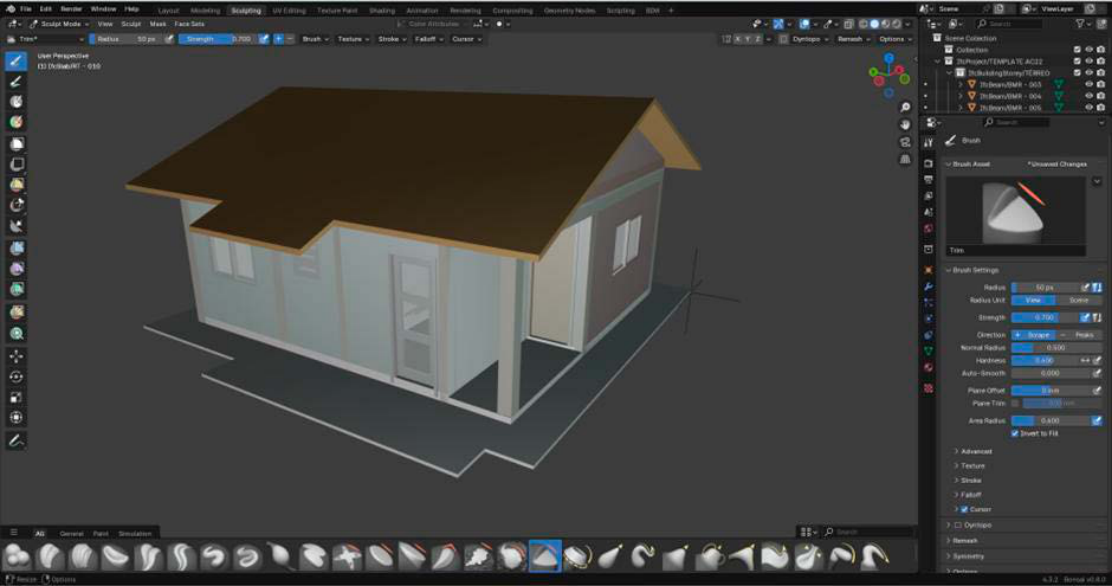
The report identified a steep learning curve. The absence of specialists in the software during the workshop also mattered when interpreting the difficulties. Under those conditions, time to become familiar with the tool and the availability of support were part of the problem the workshop brought to light. Figure 2 shows the Blender tools available in BONSAI.
Figure 2 — Blender tools available in BONSAI
Source: (Salgado; Casara; Holanda; Coutinho; Menezes; Guimarães; Fantin; Lopes; Cruz, 2025). Figure 4 in the proceedings, p. 390
The contribution was to document a way to experiment and identify its limits. For teams considering a pilot with free software, the case showed why access, practice time, and technical support had to be assessed separately.
Read the paper in the free proceedings of the 8th A ERA BIM Congress (p. 384)
See the version of this article published on Zenodo
Want to learn more about teaching BIM model review in higher education? Explore EBBIM’s course “BIM na Docência Superior”.