IFC quantity takeoff: auditing areas for complex geometries
This Dicas de BIM post is part of a selection of standout papers from the proceedings of the 7th and 8th editions of the A ERA BIM International Congress, organized by @SINAENCO in 2024 and 2025, respectively. The article was published in the proceedings of the 7th edition, held November 26–28, 2024, in São Paulo, Brazil.
The paper was written by João Alberto da Motta Gaspar, Rodrigo Costa Loureiro, Thaís Bernardo dos Santos, Alcione Dolavale.
The script used IFC model geometry to calculate the top area of nonrectangular pile caps that the tested tools could not measure as required for estimating.
In the quantity takeoff audit of a social housing project documented in the 2024 proceedings, the team uncovered a problem in how some IFC geometries were read. The software tested did not always return the expected area for the upper face of nonrectangular elements such as pile caps. The team investigated why those shapes escaped conventional calculations and how the measurements could be checked.
The case involved a ten-story building with 37 housing units. The authors used Design Science Research to develop algorithms for geometric representations that the software examined had not interpreted adequately. They focused on the particular surface that belonged in the quantity takeoff, identifying it from the geometry described in the IFC file. Figure 1 shows the missing top-face area calculation for IfcFooting elements.
Figure 1 — Missing top-face area calculation for IfcFooting elements
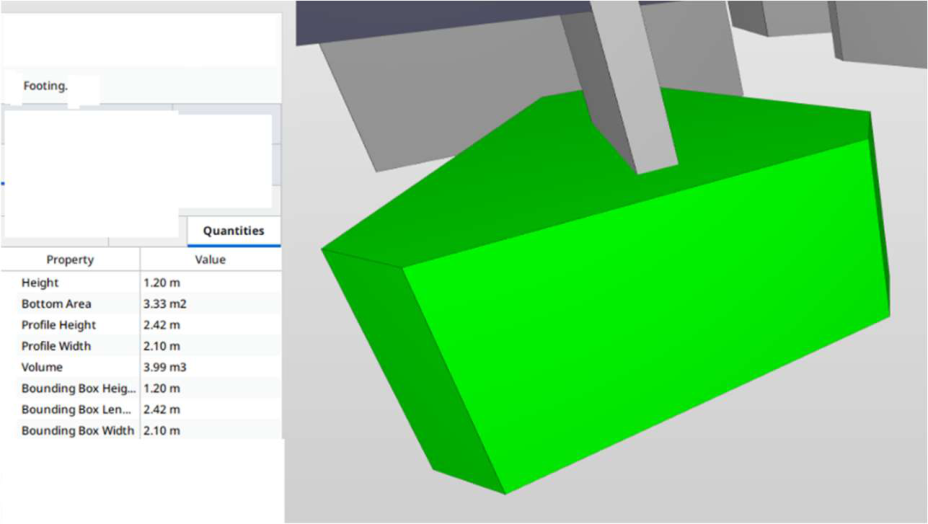
Source: (Gaspar; Loureiro; Santos; Dolavale, 2024). Figure 3 in the proceedings, p. 257
The discrepancy did not require the whole element to be missing. It could be visible and still have an incorrectly measured face. The audit therefore examined the geometric representation used for the calculation instead of treating the ability to display the pile cap as sufficient evidence of an accurate quantity.
The distinction mattered because the same open standard allowed shapes to be described in several ways. Two applications could read the file and still treat the element being measured differently. The pile caps made visible a discrepancy that could have gone unnoticed in a spreadsheet containing hundreds of items. Figure 2 shows the approach used by the script to calculate soil tamping quantities.
Figure 2 — Approach used by the script to calculate soil tamping quantities
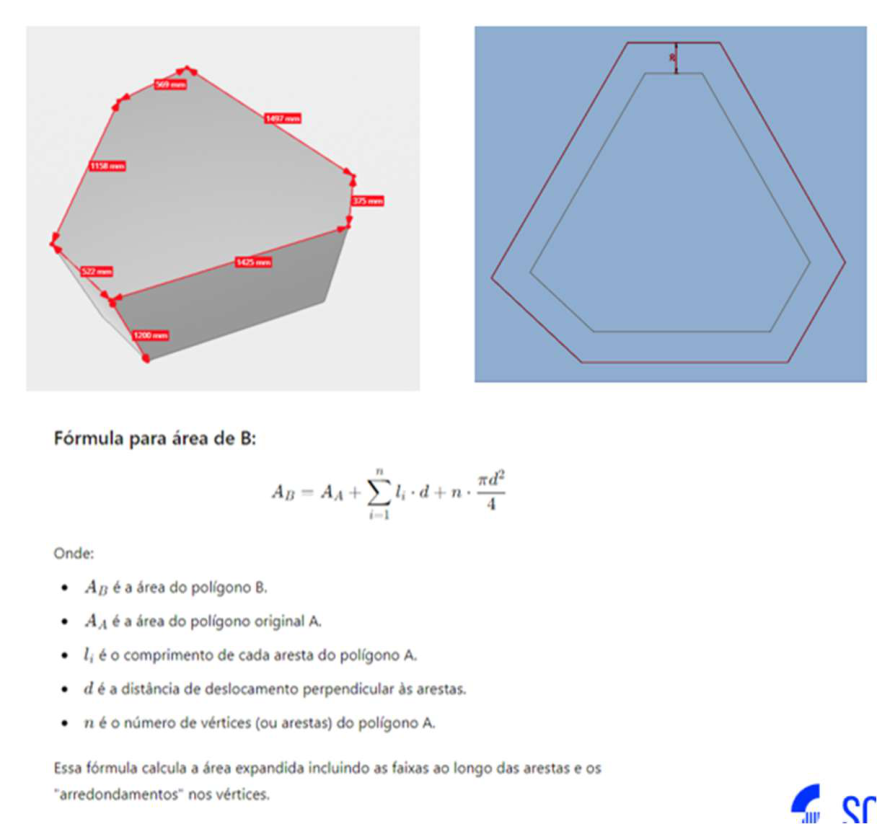
Source: (Gaspar; Loureiro; Santos; Dolavale, 2024). Figure 10 in the proceedings, p. 262
The study made an audit step explicit: locate unusual geometries, identify the relevant face, and verify the extracted value. For construction estimating, it showed why the geometric origin of a quantity also warranted review.
Read the paper in the free proceedings of the 7th A ERA BIM Congress (p. 254)
See the version of this article published on Zenodo
Want to learn more about checking areas and other quantities in IFC models? Explore EBBIM’s course “IFC – dos fundamentos à gestão de projetos e obras”.